Popular attractions near Villa

LASSITHI PLATEAU

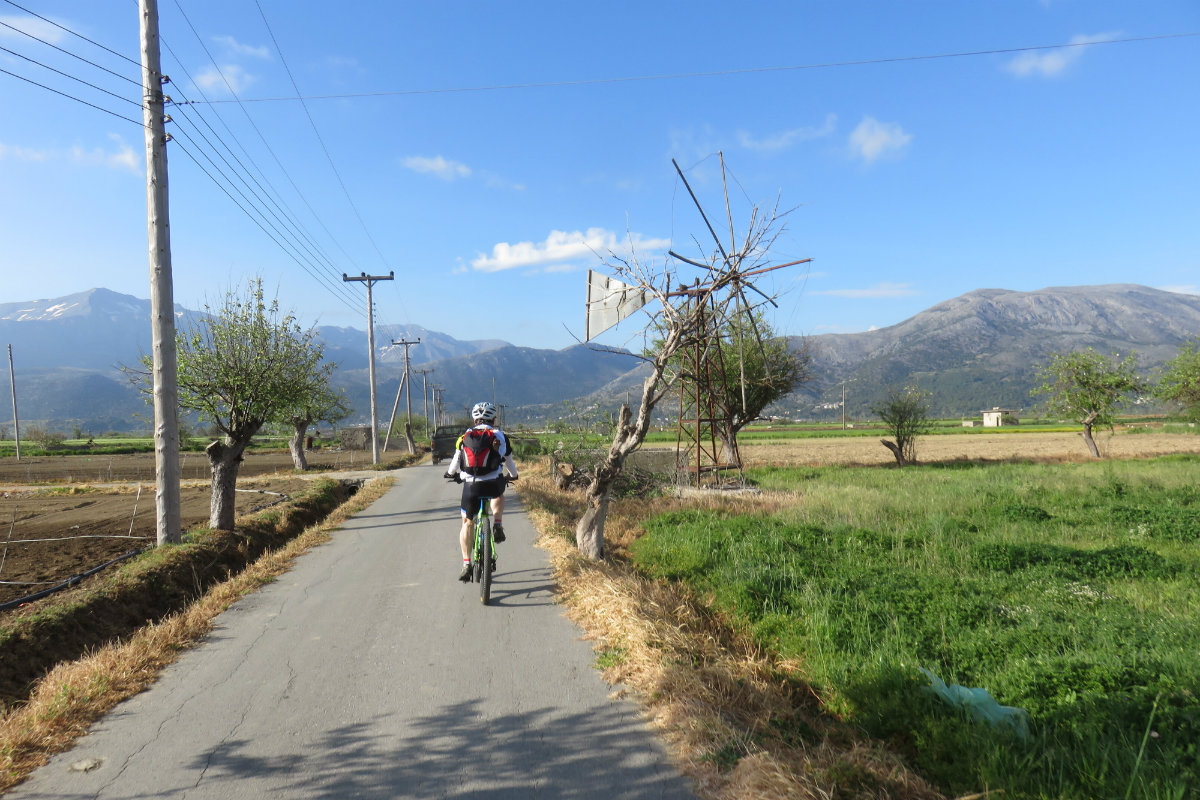
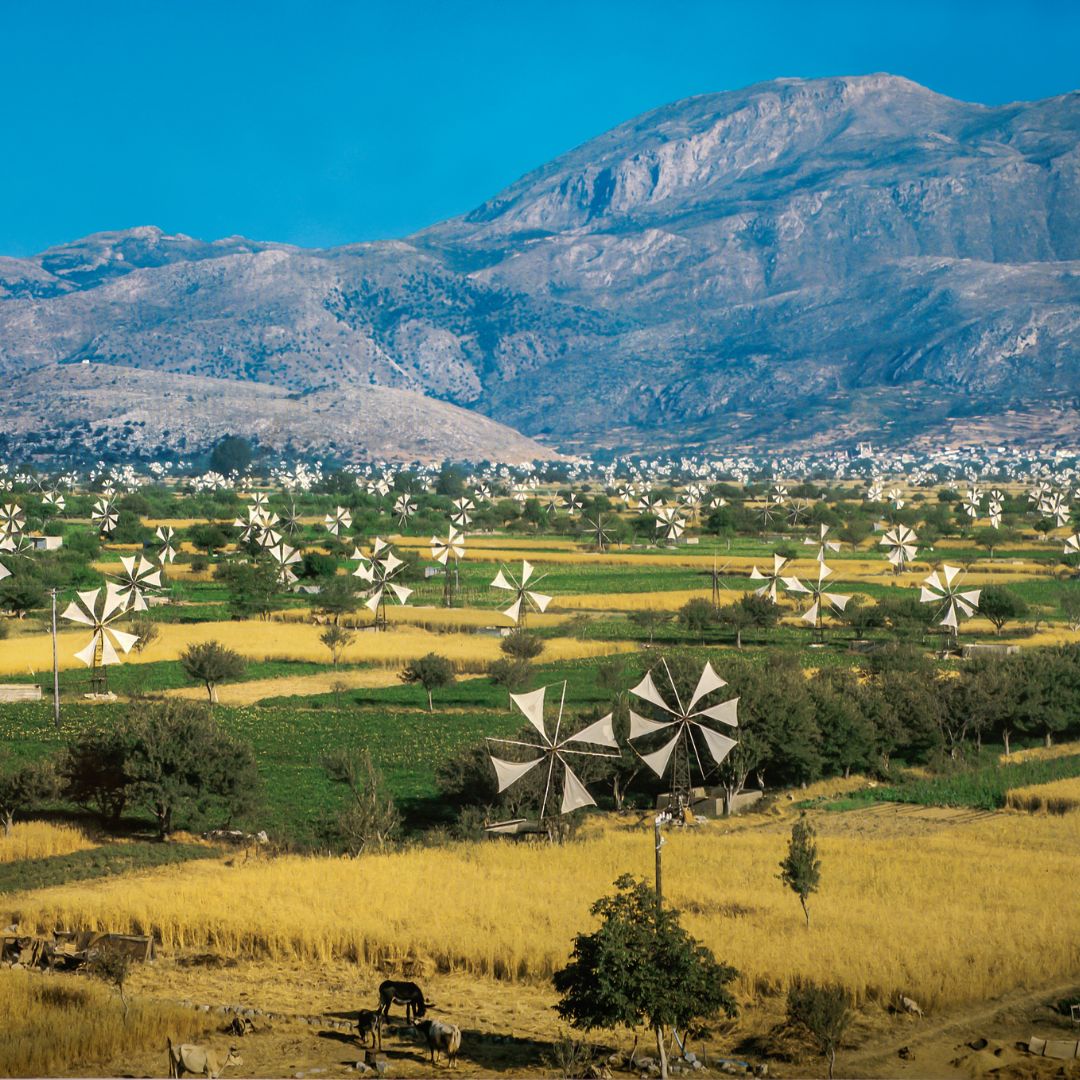
The wonderful Lassithi Plateau is located about 25km south of Malia and 70km west of Heraklion city. Located in a peaceful and fertile region, it is surrounded by the wild peaks of Dikti and several smaller plateaus. The altitude ranges from 800 to 850m, making Lassithi one of the few residential insular areas in the Mediterranean at such high altitude. Indeed, every year the plateau is covered by snow and then thousands of Cretans arrive to admire the white landscape. In most years, snow remains in the mountain peaks till mid-spring.The capital of the plateau is Tzermiado, while two more impostant villages are Agios Georgios and Psychro.

LASSITHI PLATEAU

The wonderful Lassithi Plateau is located about 25km south of Malia and 70km west of Heraklion city. Located in a peaceful and fertile region, it is surrounded by the wild peaks of Dikti and several smaller plateaus. The altitude ranges from 800 to 850m, making Lassithi one of the few residential insular areas in the Mediterranean at such high altitude. Indeed, every year the plateau is covered by snow and then thousands of Cretans arrive to admire the white landscape. In most years, snow remains in the mountain peaks till mid-spring.The capital of the plateau is Tzermiado, while two more impostant villages are Agios Georgios and Psychro.

KNOSSOS

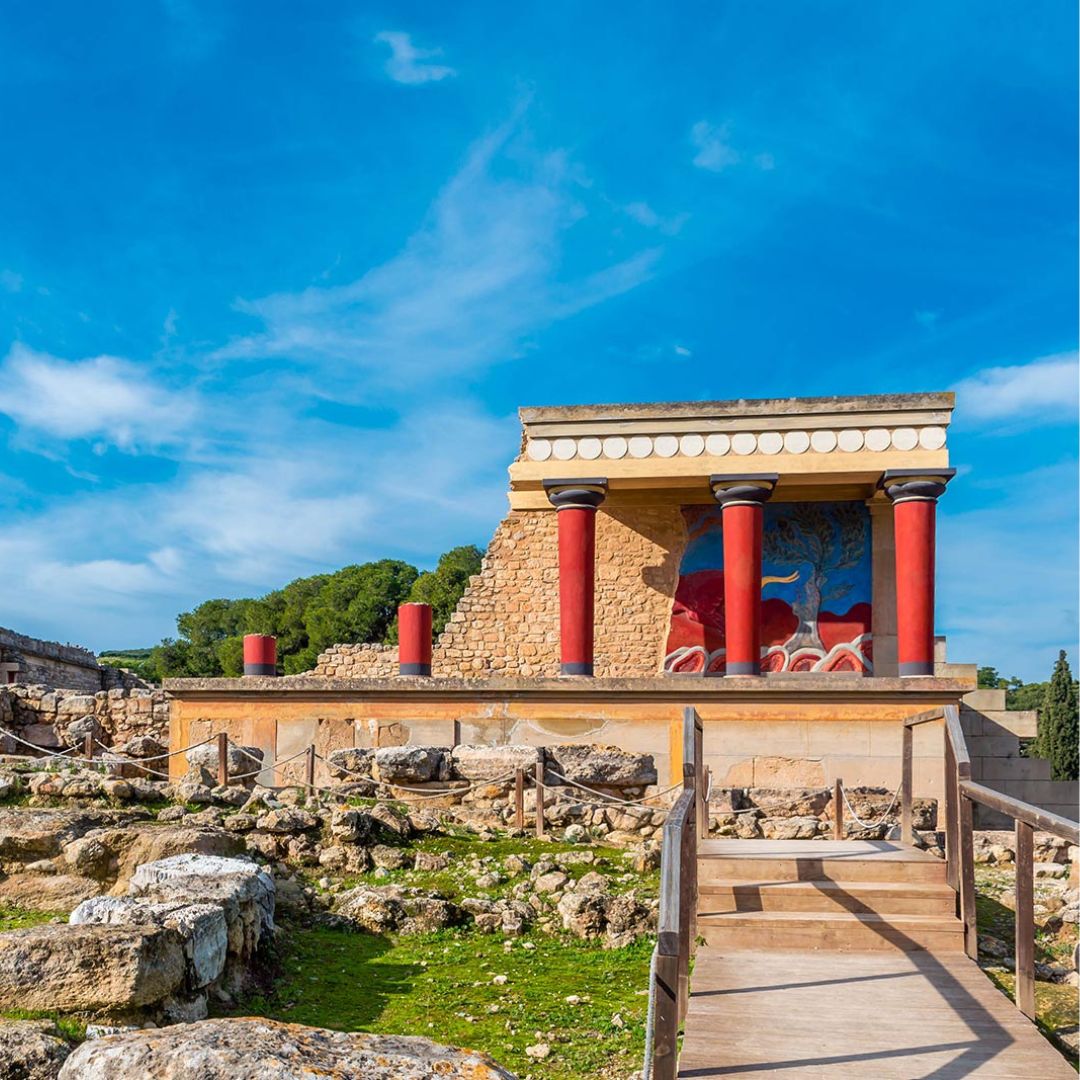
The center of Minoan civilization and capital of Minoan Crete lay 5km south of Heraklion. Knossos flourished for approximately two thousand years. It had large palace buildings, extensive workshop installations and luxurious rock-cut cave and tholos tombs. As a major center of trade and the economy, Knossos maintained ties with the majority of cities in the Eastern Mediterranean. Wealth accumulation and the advancement of an urban lifestyle were the hallmarks of this zenith, which began circa 2000 BC and was typified by magnificent monumental buildings and a complex social structure.

NATURAL HISTORY MUSEUM

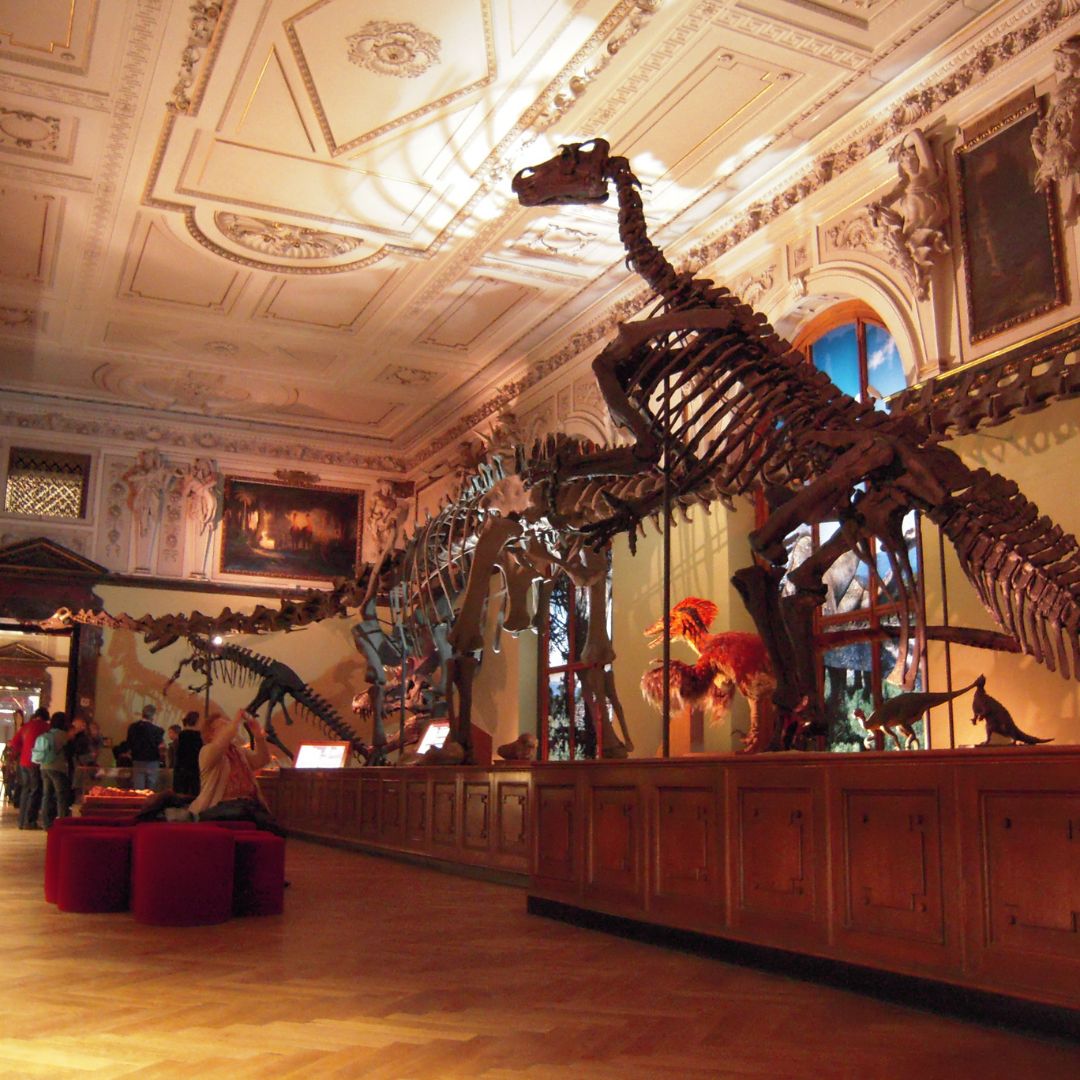
Operating within the wider University of Crete framework, the Natural History Museum of Crete fulfills all the roles demanded of a comprehensive, modern museum by keeping and developing collections, carrying out research into the natural world, contributing to teaching at all levels in the education system, promoting the unique nature of habitats, in Crete & the Mediterranean. The museum’s impressive growth over the last decade reflects the competence and professionalism of its staff, as well as the growing need in society for proper information concerning the environment.

NATURAL HISTORY MUSEUM

Operating within the wider University of Crete framework, the Natural History Museum of Crete fulfills all the roles demanded of a comprehensive, modern museum by keeping and developing collections, carrying out research into the natural world, contributing to teaching at all levels in the education system, promoting the unique nature of habitats, in Crete & the Mediterranean. The museum’s impressive growth over the last decade reflects the competence and professionalism of its staff, as well as the growing need in society for proper information concerning the environment.

HISTORICAL MUSEUM

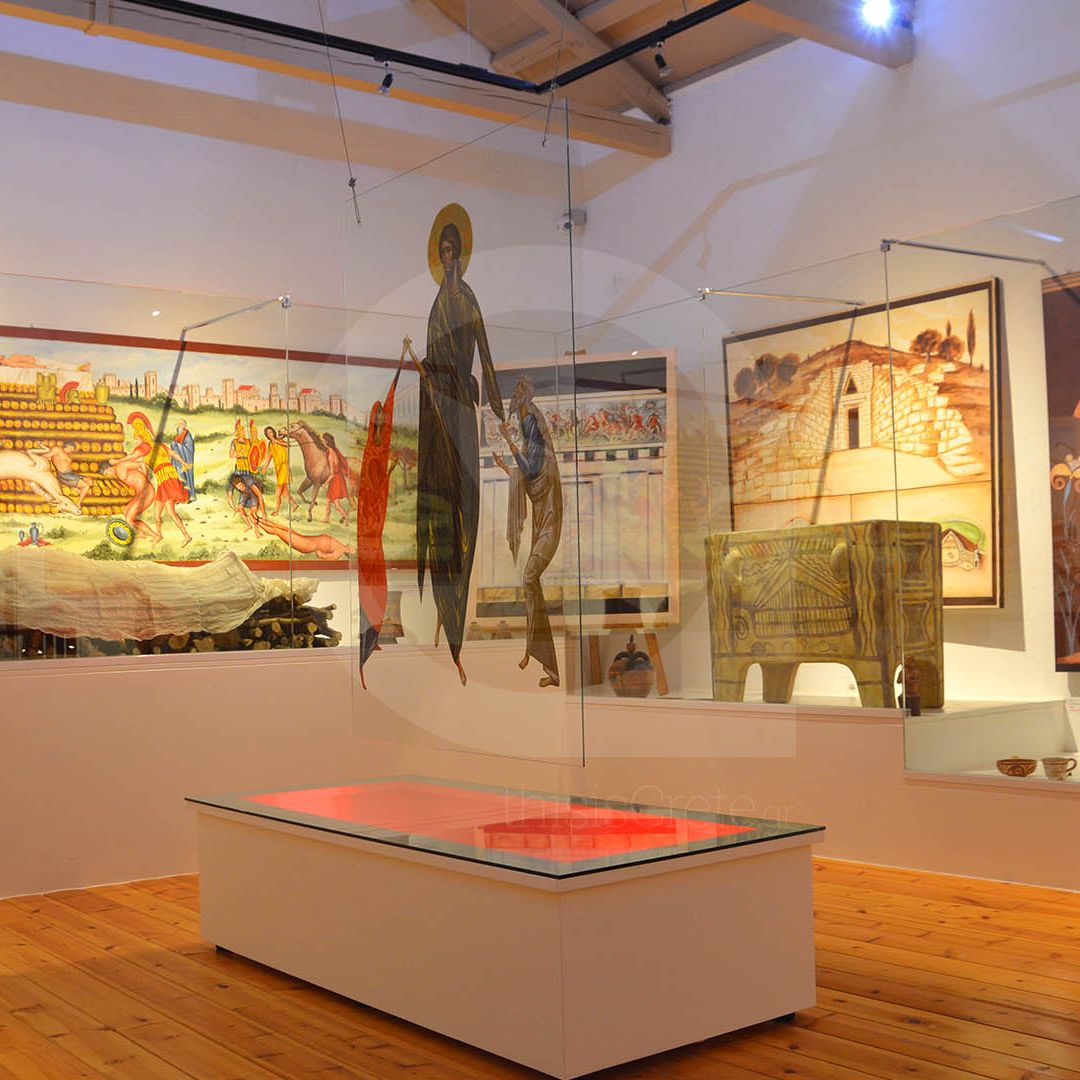
Founded in 1953 by the Society of Cretan Historical Studies (S.C.H.S.), the Historical Museum of Crete (H.M.C.) presents a comprehensive view of Cretan history from early Christian times to the present day. The original goal of those founding the Historical Museum of Crete was to collect and preserve valuable archaeological, ethnographic and historical material deriving from the medieval and modern periods in Cretan history. The process of enriching the collections, extending exhibition space and redefining the museum’s aims has never ceased. Prolific research and publishing activity, the organisation of temporary exhibitions, educational programmes and the use of audiovisual media all form part of the modern educational role adopted by the Historical Museum of Crete over time. The same approach also includes the gradual re-organisation of the collections on display so as to appeal to a wider range of visitors, thus offering them the opportunity to understand the many facets of historical development on Crete.

ARCHEOLOGICAL MUSEUM

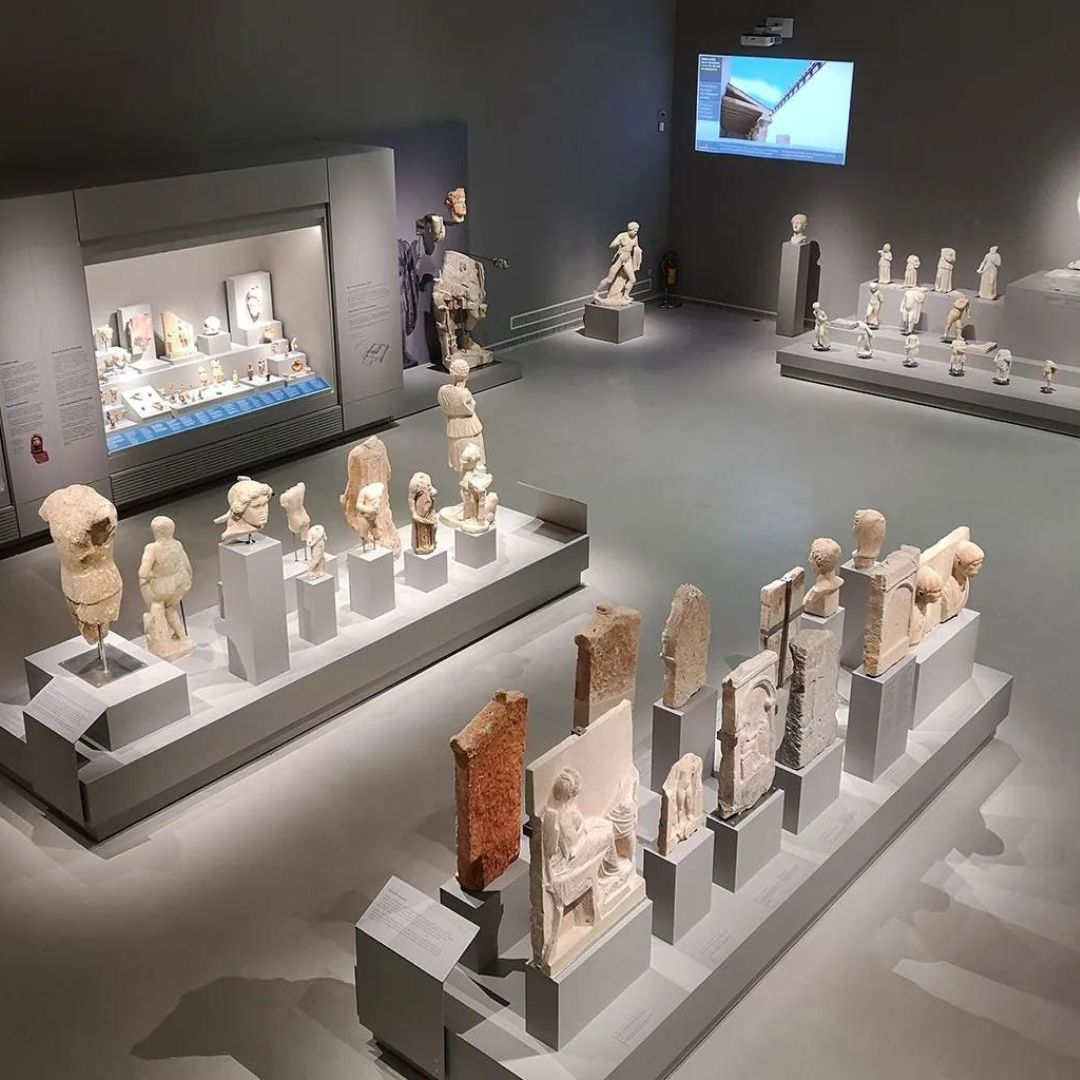
The Heraklion Archaeological Museum is regarded as one of Europe’s most important museums. The present building was constructed between 1933 and 1937 to plans by P. Karantinos, on the site of the imposing Venetian Franciscan friary destroyed by an earthquake in 1856. The museum brings together archaeological finds from all over Crete, covering over 5500 years of the island’s history. Pride of place is given to the treasures of Minoan civilisation, the entire historical course of which can thus be appreciated. Justly regarded as the home of Minoan civilisation par excellence, the museum houses the most important collection of Minoan antiquities the world over. Since November 2006 the museum has been closed for interior renovation. A small temporary exhibition housing the museum’s most important exhibits is on view in a specially designed room on the north side, off I. Chatzidaki St. Exhibits include the Snake Goddesses, the Phaistos Disk, the La Parisienne and Bull Leaping frescoes and the “Ring of Minos”.

ARCHEOLOGICAL MUSEUM

The Heraklion Archaeological Museum is regarded as one of Europe’s most important museums. The present building was constructed between 1933 and 1937 to plans by P. Karantinos, on the site of the imposing Venetian Franciscan friary destroyed by an earthquake in 1856. The museum brings together archaeological finds from all over Crete, covering over 5500 years of the island’s history. Pride of place is given to the treasures of Minoan civilisation, the entire historical course of which can thus be appreciated. Justly regarded as the home of Minoan civilisation par excellence, the museum houses the most important collection of Minoan antiquities the world over. Since November 2006 the museum has been closed for interior renovation. A small temporary exhibition housing the museum’s most important exhibits is on view in a specially designed room on the north side, off I. Chatzidaki St. Exhibits include the Snake Goddesses, the Phaistos Disk, the La Parisienne and Bull Leaping frescoes and the “Ring of Minos”.

THE MUSEUM OF THE BATTLE OF CRETE

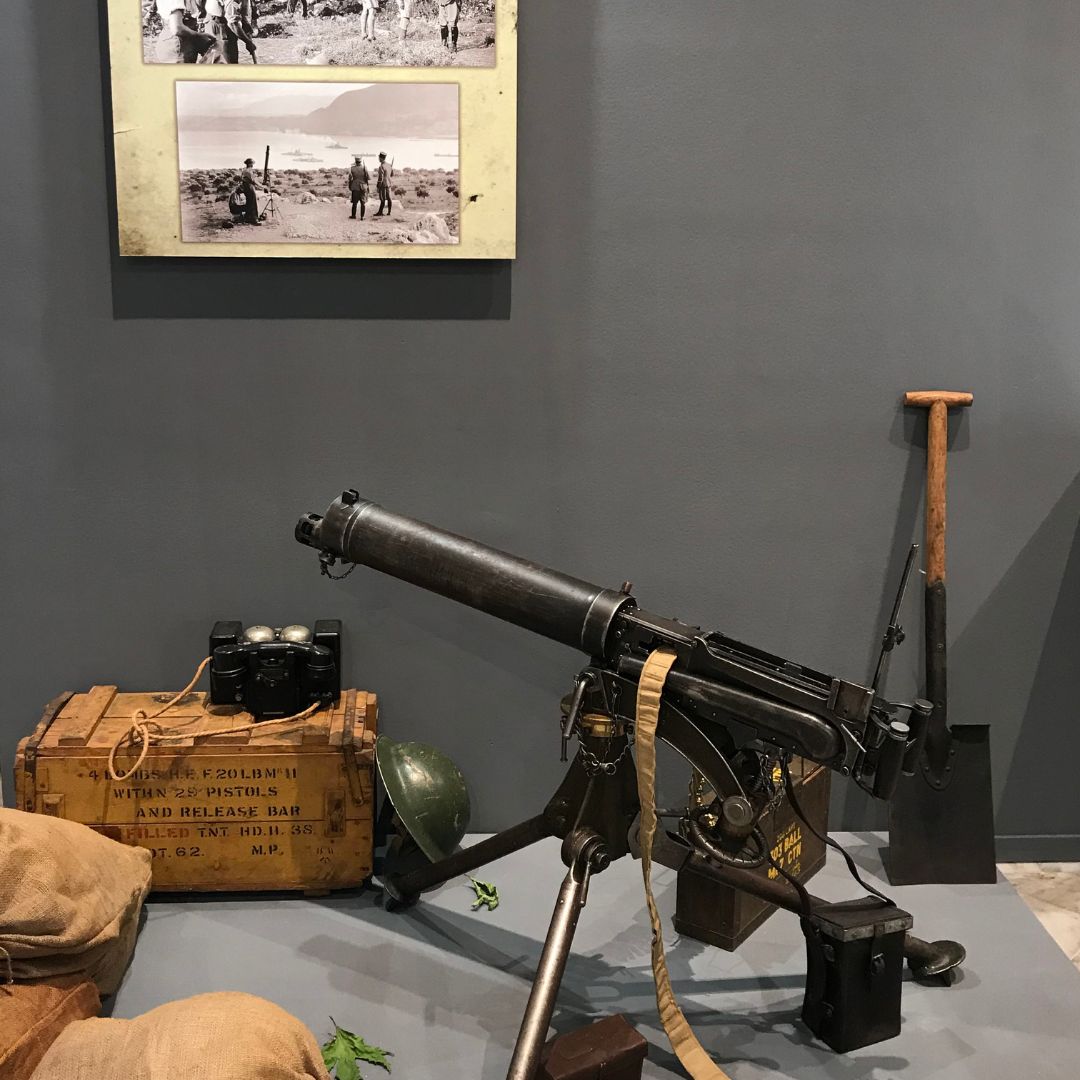
The Museum of the Battle of Crete and National Resistance (1941-1945) was founded by the Municipality of Heraklion in May 1994.The museum’s aim is to collect, preserve and exhibit relics from 1941-1945 in an appropriate manner, as well as to document and disseminate information on the people’s struggle during the Battle of Crete and the German-Italian occupation. In addition to presenting a range of material witnesses to the past, the museum aims to cultivate interest and respect for the history of Crete.

CRETE AQUARIUM

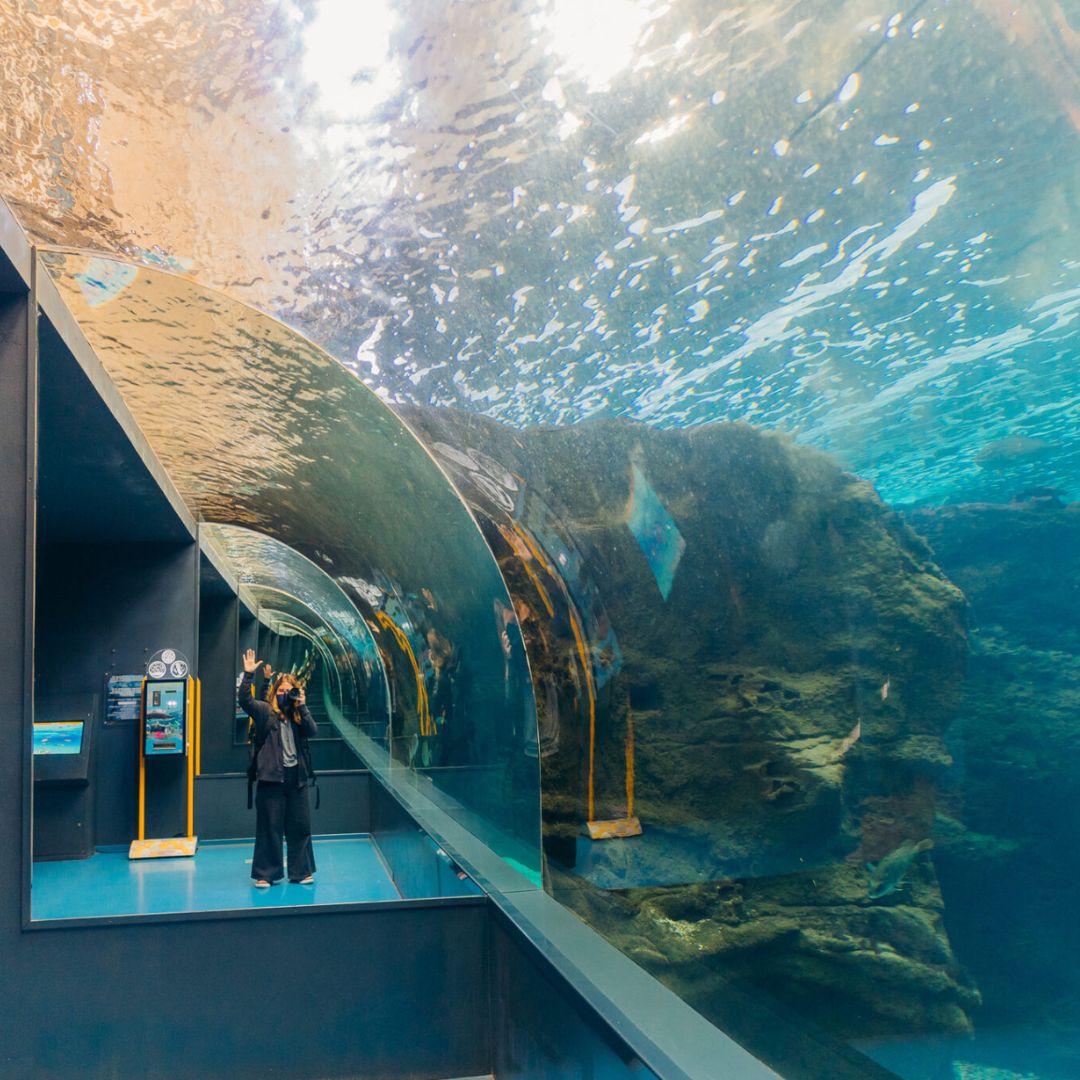
The magic of the sea bed and the diving experience into such a familiar yet unknown world -the sea world of the Mediterranean – cannot be described in just a few words. The open sea of the Mediterranean, the world of numerous flocks of pelagic fish, marine mammals, as well as large predators and of course sharks!

CRETE AQUARIUM

The magic of the sea bed and the diving experience into such a familiar yet unknown world -the sea world of the Mediterranean – cannot be described in just a few words. The open sea of the Mediterranean, the world of numerous flocks of pelagic fish, marine mammals, as well as large predators and of course sharks!

THE CAVES OF ZEUS

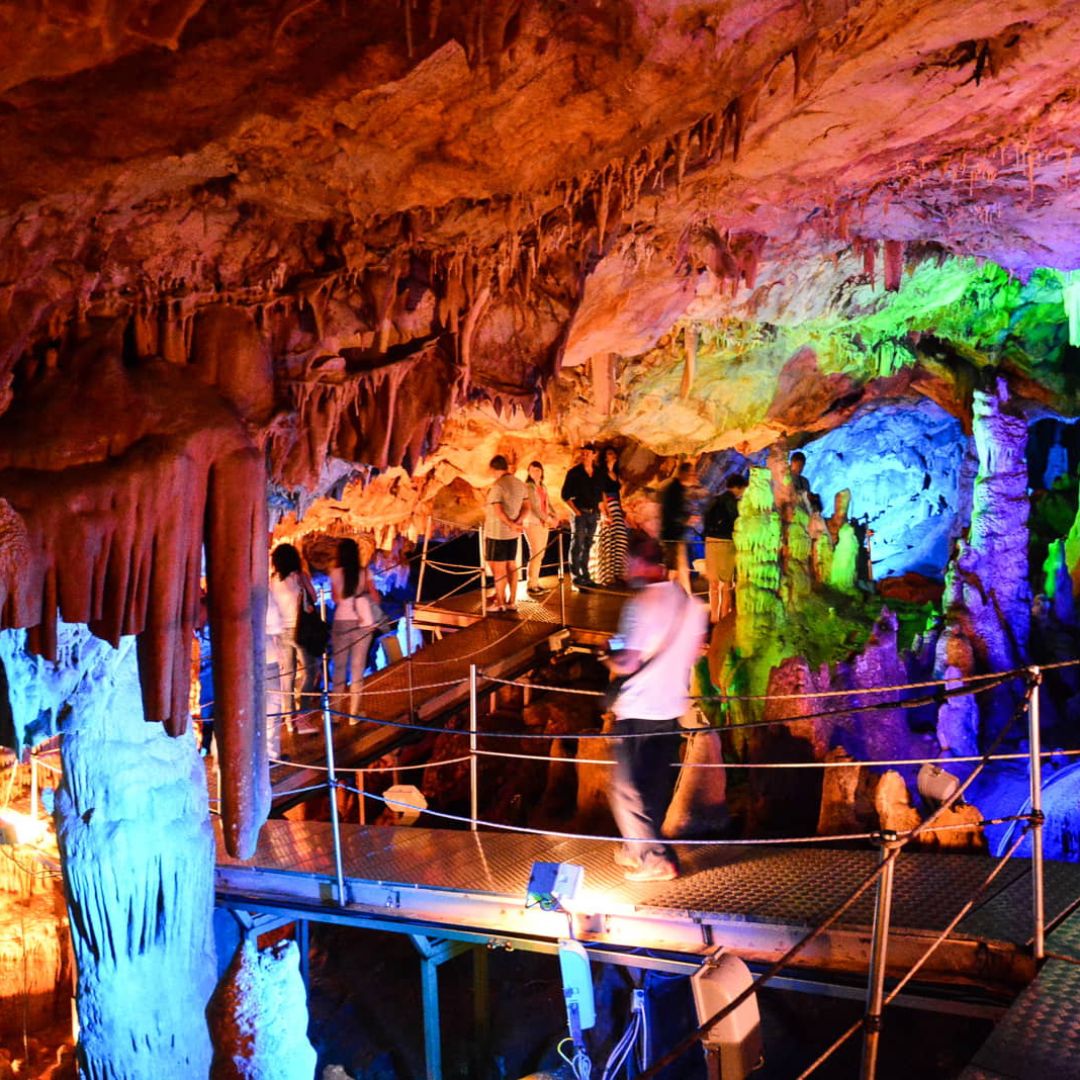
The impressive cave of Zeus, the God of Hospitality, Philoxenia as we call it in Greece. The Diktaean Cave, is located above the village Psychro in Lassithi Plateau at an altitude of 1025m. The cave, which has an area of 2200 sq.m, is well lit and the paths in it come along a well-designed path of 250m length. In Cretan mythology three heroines are closely linked to Minos: Pasiphae, Ariadne and Phaedra. Many archaeologists believe that Ariadne is closest to the deity of the cave and her lover, Dionysus. Most researchers identify the cave of Psychro as the mythical Dictaean Cave, as reported by Hesiod. Zeus was born and raised here, with the help of the Nymphs and the Kouretes. For this reason, this also called the “Bethlehem of the Ancient World”. The cave itself has been associated with stories like that of the seer Epimenides who “slept” here for 57 years, the kidnap of Europe by Zeus, the birth of Minos, the Harpies, etc.

WATERCITY

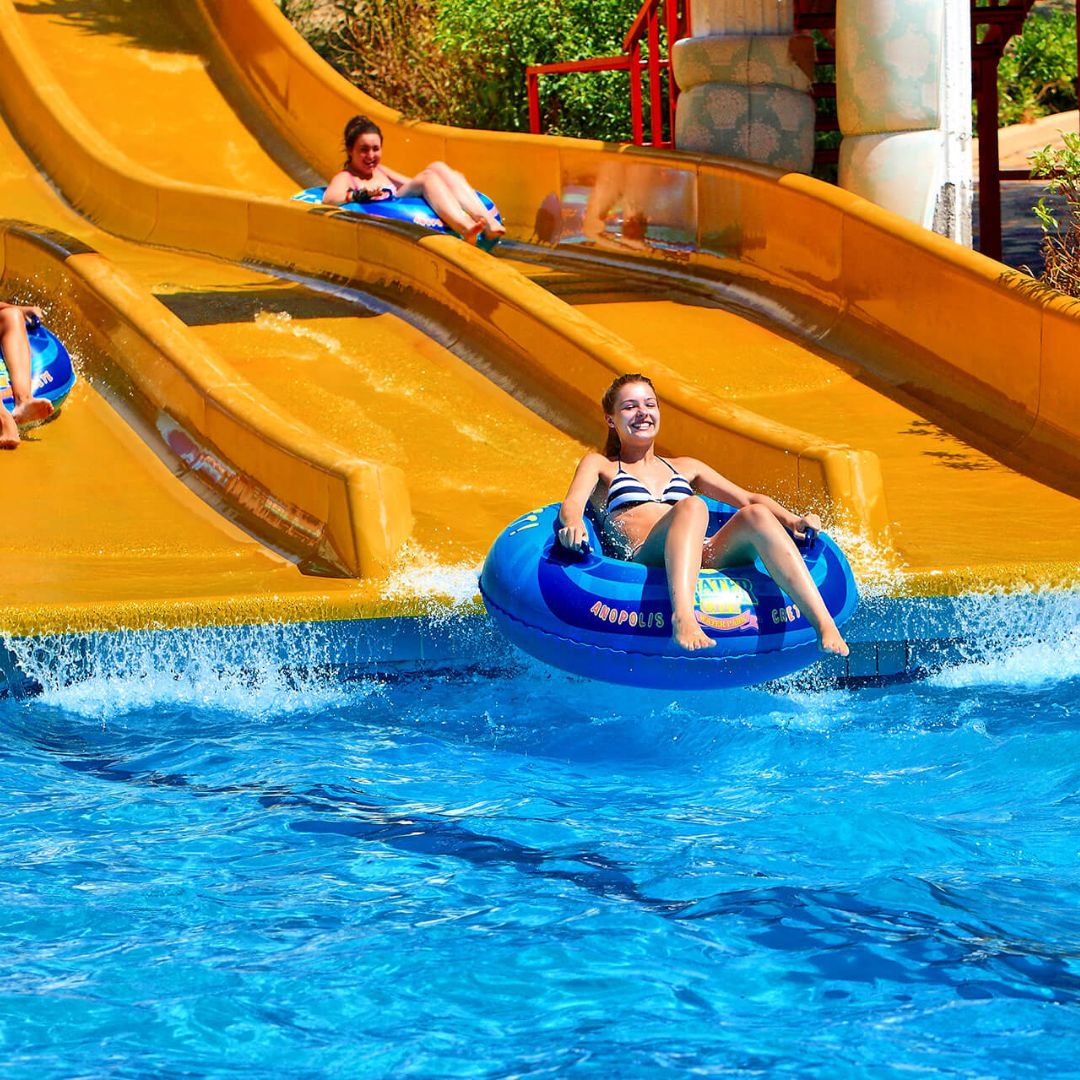
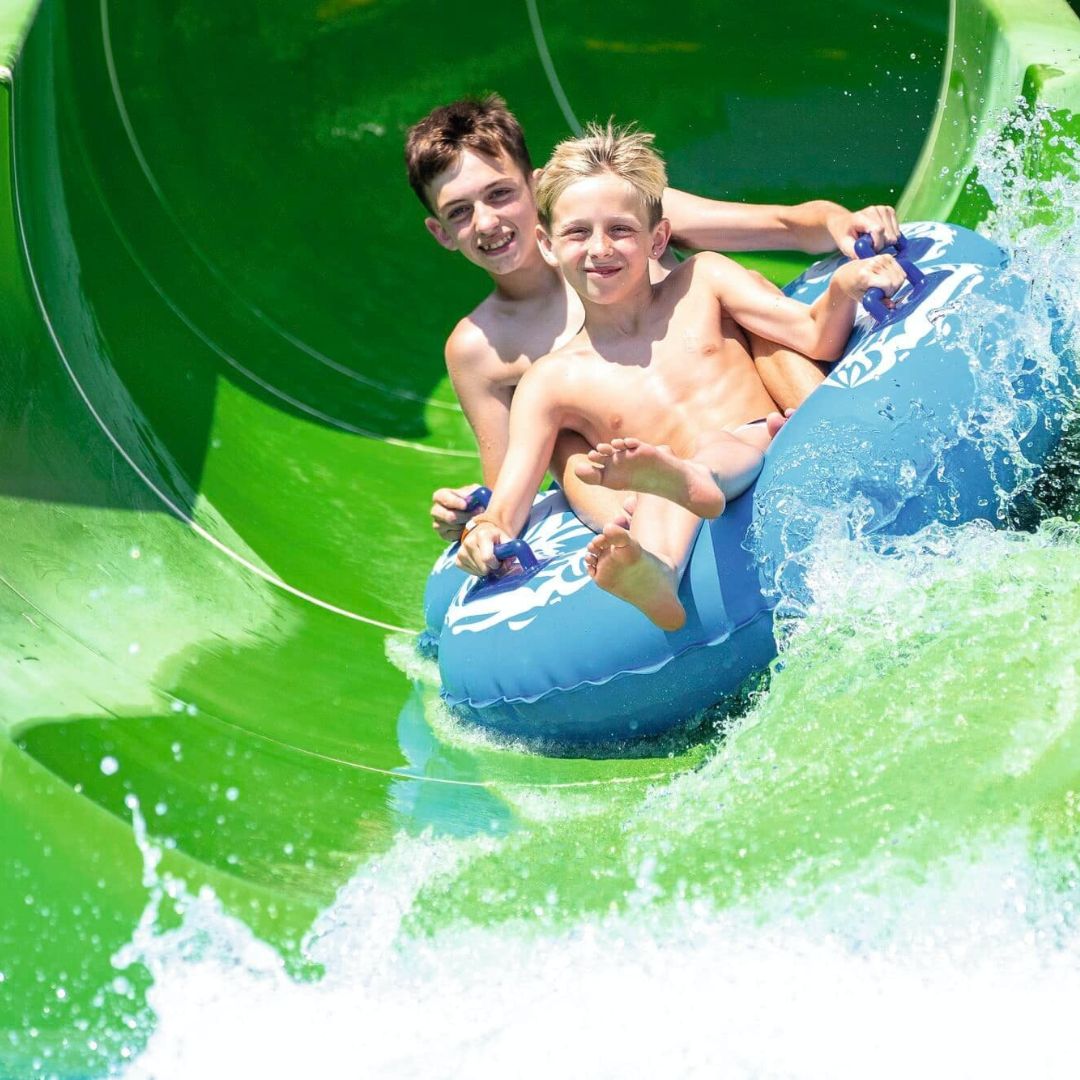
Watercity Waterpark is a huge water park promising young and old endless hours of water play. It is located in Anopolis village, 17 km east from Heraklion, covering an area of 50.000 square meters. Watercity Waterpark provides also comfortable and free parking lot.

Entering the Watercity Waterpark and passing by the reception, one can see the swimming pools, water slides, children’s pools, playground, bar, restaurant, souvenir shop, Boutique, Beauty Salon etc. The numerous games in this park aim to raise adrenaline rush offering moments of laughter and fun. Fast falls and endless slides with rotations and closed tunnels are totally breathtaking.

For those who want to relax and calm, there are mild water facilities to try. Watercity Waterpark has well-trained and qualified security personnel for acting immediately dealing with any problem and ensuring the visitors’ safety.

WATERCITY

Watercity Waterpark is a huge water park promising young and old endless hours of water play. It is located in Anopolis village, 17 km east from Heraklion, covering an area of 50.000 square meters. Watercity Waterpark provides also comfortable and free parking lot.

Entering the Watercity Waterpark and passing by the reception, one can see the swimming pools, water slides, children’s pools, playground, bar, restaurant, souvenir shop, Boutique, Beauty Salon etc. The numerous games in this park aim to raise adrenaline rush offering moments of laughter and fun. Fast falls and endless slides with rotations and closed tunnels are totally breathtaking.

For those who want to relax and calm, there are mild water facilities to try. Watercity Waterpark has well-trained and qualified security personnel for acting immediately dealing with any problem and ensuring the visitors’ safety.

ACQUA PLUS

Acqua Plus water park is located 30 km east of the city of Heraklion.

Once arriving at Acqua Plus, the visitors will see a big parking lot to park their cars. From that point, the visitors can see the extreme water games in front of them. The park is divided into two sections. The one section is for adults and the other section is for children.

Concerning the adults’ section, there are 11 extreme waterslides or games to choose – from tsunami and crazy river to giant slides and kamikaze waterslides. As far as the kids’ area is concerned, there are many slides and water games for the young visitors to choose. In addition, there are also games out of the water that can excite their fantasy and imagination. In general the water park offers more than 50 different slides, games and facilities and all these under the palm trees and next to gorgeous garden consisting of both Cretan and exotic flowers and trees.

MALIA

Malia is a modern town 34km east of Heraklion and one of the most famous tourist destinations in Crete. It is located on the coastal smooth land formed from the northern foothills of Mount Selena until sea. The ancient town was named after its position – omalia/Malia (i.e. smooth land).


Until the 1940s, it was a small village whose inhabitants were engaged in banana and vegetable cultivation. It was a picturesque village in a landscape with stone windmills from which the inhabitants watered their gardens. Nowadays, the city has experienced a rapid tourist development with luxury hotels, restaurants and tourist shops flooding the area and attracting thousands of tourists every year.

MALIA

Malia is a modern town 34km east of Heraklion and one of the most famous tourist destinations in Crete. It is located on the coastal smooth land formed from the northern foothills of Mount Selena until sea. The ancient town was named after its position – omalia/Malia (i.e. smooth land).


Until the 1940s, it was a small village whose inhabitants were engaged in banana and vegetable cultivation. It was a picturesque village in a landscape with stone windmills from which the inhabitants watered their gardens. Nowadays, the city has experienced a rapid tourist development with luxury hotels, restaurants and tourist shops flooding the area and attracting thousands of tourists every year.

Havgas Gorge

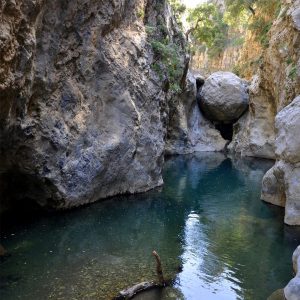
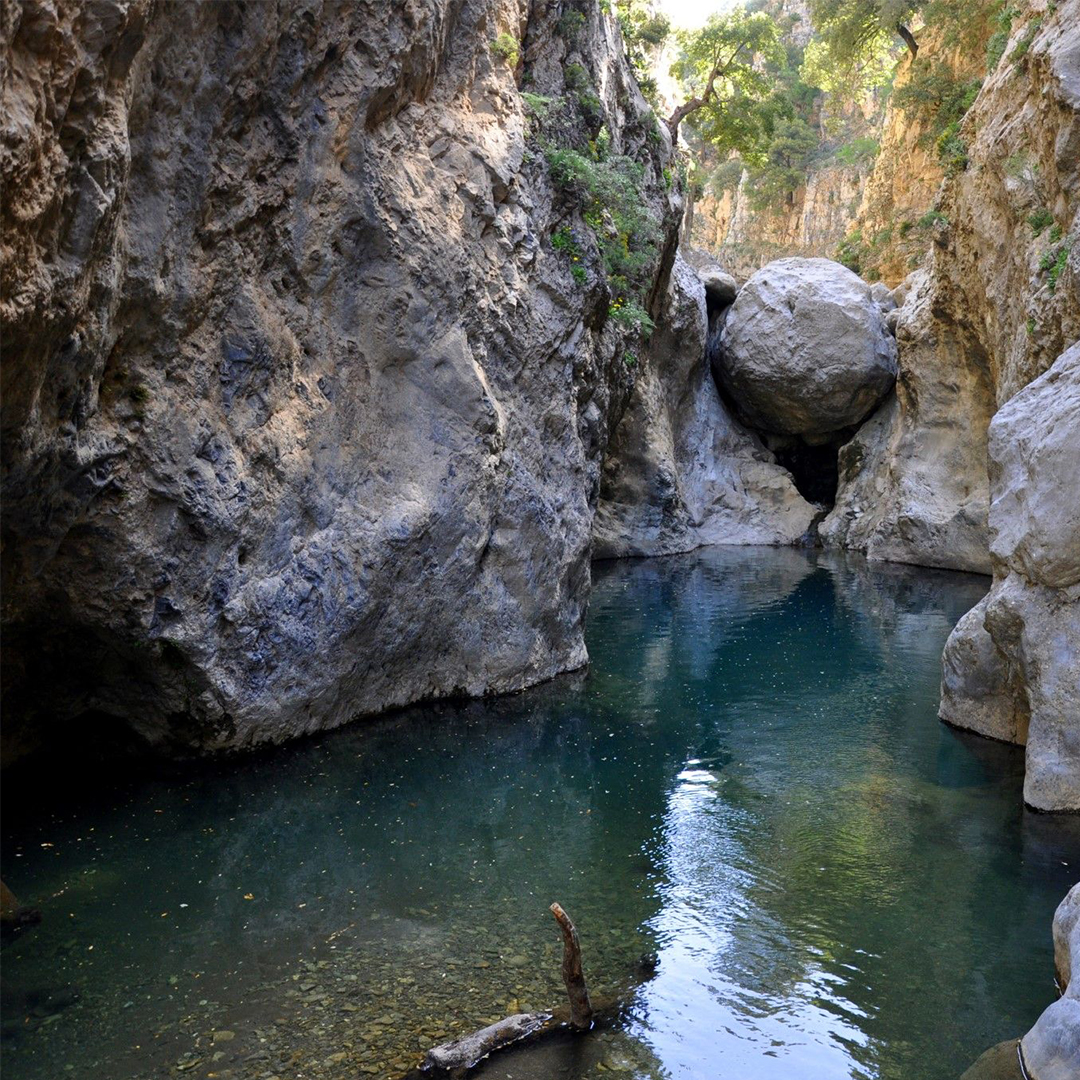
Havgas is the only gorge in the Lassithi plateau and through it flows the waters of the Ksenikos River, also known as Havgas. Gorge’s starting point is in the settlement of Agios Konstantinos and ends at the neighboring plateau of Katharos. The gorge has a length of about 4 km and it is relatively smooth and accessible to everyone, until the point where the beautiful lake of “Neraidokolympos” is located. The lake is formed at the base of a small waterfall, on top of which there is a large round boulder that blocks the path to the rest of the gorge. If you wish to continue from there, you will have to take first a few steps back, and then follow the E4 path on the side of the gorge. On its slopes, there are many trees and bushes, which mainly consist of maples and hollies.

STALIDA

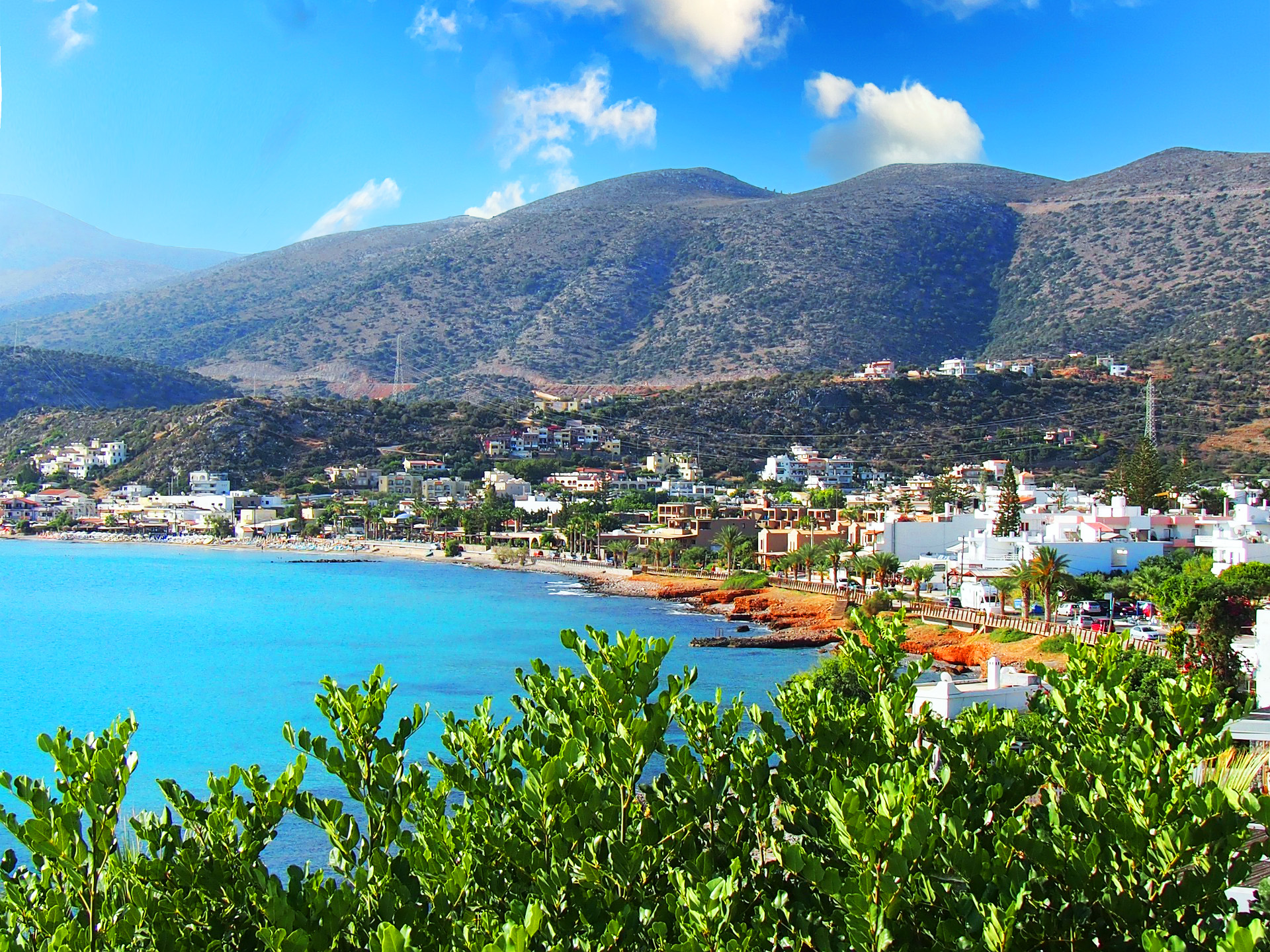
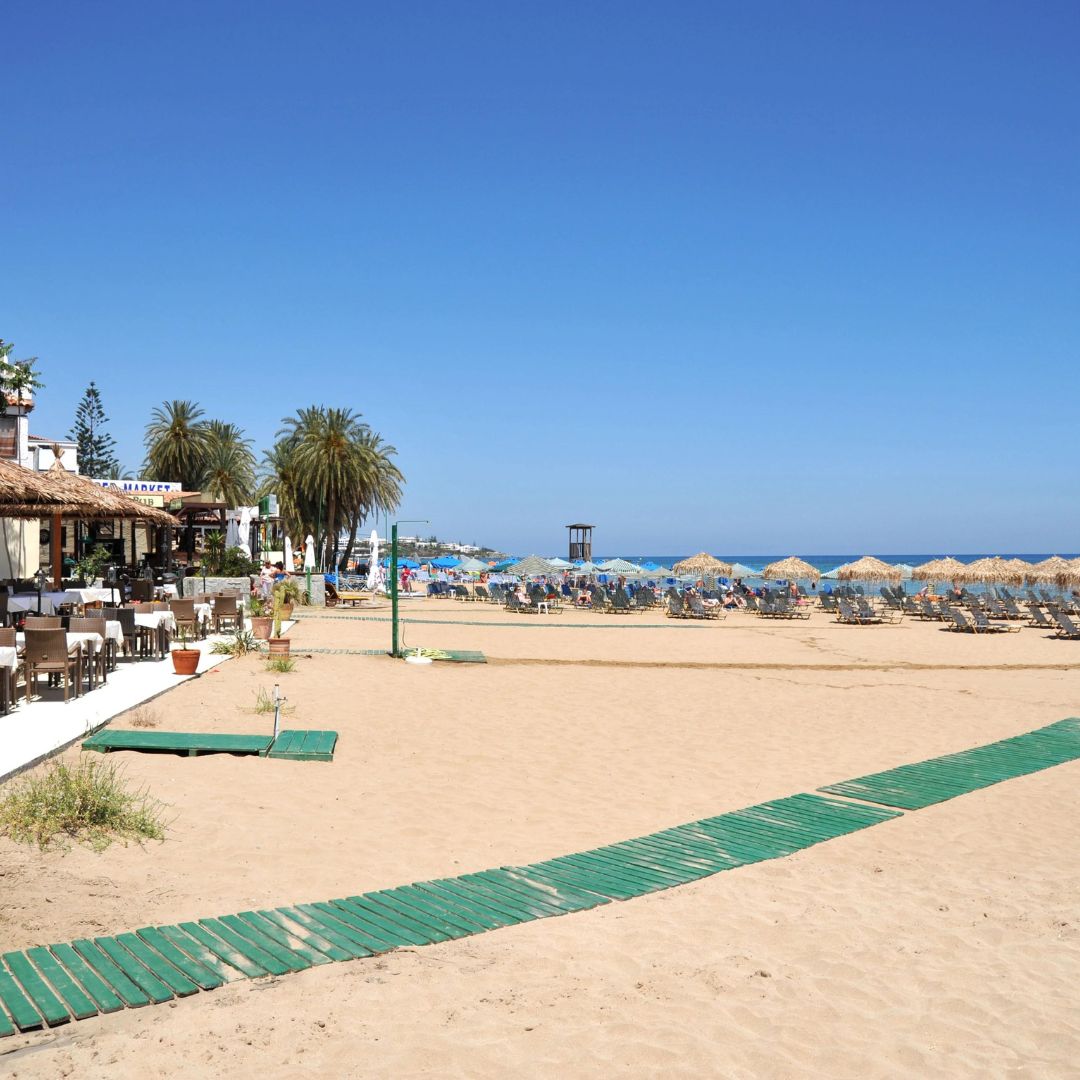
Stalida is a seaside settlement 30km east of Heraklion and is located between Hersonissos and Malia at a short distance to both of them. It is the newest settlement in the area and was developed and set up due to tourism. From a small village created by the inhabitants of Mochos, Stalida is, nowadays, a popular tourist resort. The name “Stalis” is an ancient Greek place name and comes from the verb “stalizo” (i. e. rest under a shade) as at this place, the stockbreeders from the surrounding areas let their sheep and goats get rested.

Unlike the adjacent settlements of Hersonissos and Malia with their lively nightlife, Stalida is a quieter place comparing to them and is offered for family holidays. Visitors can enjoy unique moments of fun and relaxation in Stalida beach whose reference point is the 5km long coastal road where shops, restaurants and bars are located.

STALIDA

Stalida is a seaside settlement 30km east of Heraklion and is located between Hersonissos and Malia at a short distance to both of them. It is the newest settlement in the area and was developed and set up due to tourism. From a small village created by the inhabitants of Mochos, Stalida is, nowadays, a popular tourist resort. The name “Stalis” is an ancient Greek place name and comes from the verb “stalizo” (i. e. rest under a shade) as at this place, the stockbreeders from the surrounding areas let their sheep and goats get rested.

Unlike the adjacent settlements of Hersonissos and Malia with their lively nightlife, Stalida is a quieter place comparing to them and is offered for family holidays. Visitors can enjoy unique moments of fun and relaxation in Stalida beach whose reference point is the 5km long coastal road where shops, restaurants and bars are located.

CRETE AQUARIUM

The magic of the sea bed and the diving experience into such a familiar yet unknown world -the sea world of the Mediterranean – cannot be described in just a few words. The open sea of the Mediterranean, the world of numerous flocks of pelagic fish, marine mammals, as well as large predators and of course sharks!

Popular attractions near House

KNOSSOS

The center of Minoan civilization and capital of Minoan Crete lay 5km south of Heraklion. Knossos flourished for approximately two thousand years. It had large palace buildings, extensive workshop installations and luxurious rock-cut cave and tholos tombs. As a major center of trade and the economy, Knossos maintained ties with the majority of cities in the Eastern Mediterranean. Wealth accumulation and the advancement of an urban lifestyle were the hallmarks of this zenith, which began circa 2000 BC and was typified by magnificent monumental buildings and a complex social structure.

NATURAL HISTORY MUSEUM

Operating within the wider University of Crete framework, the Natural History Museum of Crete fulfills all the roles demanded of a comprehensive, modern museum by keeping and developing collections, carrying out research into the natural world, contributing to teaching at all levels in the education system, promoting the unique nature of habitats, in Crete & the Mediterranean. The museum’s impressive growth over the last decade reflects the competence and professionalism of its staff, as well as the growing need in society for proper information concerning the environment.

NATURAL HISTORY MUSEUM

Operating within the wider University of Crete framework, the Natural History Museum of Crete fulfills all the roles demanded of a comprehensive, modern museum by keeping and developing collections, carrying out research into the natural world, contributing to teaching at all levels in the education system, promoting the unique nature of habitats, in Crete & the Mediterranean. The museum’s impressive growth over the last decade reflects the competence and professionalism of its staff, as well as the growing need in society for proper information concerning the environment.

HISTORICAL MUSEUM

Founded in 1953 by the Society of Cretan Historical Studies (S.C.H.S.), the Historical Museum of Crete (H.M.C.) presents a comprehensive view of Cretan history from early Christian times to the present day. The original goal of those founding the Historical Museum of Crete was to collect and preserve valuable archaeological, ethnographic and historical material deriving from the medieval and modern periods in Cretan history. The process of enriching the collections, extending exhibition space and redefining the museum’s aims has never ceased. Prolific research and publishing activity, the organisation of temporary exhibitions, educational programmes and the use of audiovisual media all form part of the modern educational role adopted by the Historical Museum of Crete over time. The same approach also includes the gradual re-organisation of the collections on display so as to appeal to a wider range of visitors, thus offering them the opportunity to understand the many facets of historical development on Crete.

ARCHEOLOGICAL MUSEUM

The Heraklion Archaeological Museum is regarded as one of Europe’s most important museums. The present building was constructed between 1933 and 1937 to plans by P. Karantinos, on the site of the imposing Venetian Franciscan friary destroyed by an earthquake in 1856. The museum brings together archaeological finds from all over Crete, covering over 5500 years of the island’s history. Pride of place is given to the treasures of Minoan civilisation, the entire historical course of which can thus be appreciated. Justly regarded as the home of Minoan civilisation par excellence, the museum houses the most important collection of Minoan antiquities the world over. Since November 2006 the museum has been closed for interior renovation. A small temporary exhibition housing the museum’s most important exhibits is on view in a specially designed room on the north side, off I. Chatzidaki St. Exhibits include the Snake Goddesses, the Phaistos Disk, the La Parisienne and Bull Leaping frescoes and the “Ring of Minos”.

ARCHEOLOGICAL MUSEUM

The Heraklion Archaeological Museum is regarded as one of Europe’s most important museums. The present building was constructed between 1933 and 1937 to plans by P. Karantinos, on the site of the imposing Venetian Franciscan friary destroyed by an earthquake in 1856. The museum brings together archaeological finds from all over Crete, covering over 5500 years of the island’s history. Pride of place is given to the treasures of Minoan civilisation, the entire historical course of which can thus be appreciated. Justly regarded as the home of Minoan civilisation par excellence, the museum houses the most important collection of Minoan antiquities the world over. Since November 2006 the museum has been closed for interior renovation. A small temporary exhibition housing the museum’s most important exhibits is on view in a specially designed room on the north side, off I. Chatzidaki St. Exhibits include the Snake Goddesses, the Phaistos Disk, the La Parisienne and Bull Leaping frescoes and the “Ring of Minos”.

THE MUSEUM OF THE BATTLE OF CRETE

The Museum of the Battle of Crete and National Resistance (1941-1945) was founded by the Municipality of Heraklion in May 1994.The museum’s aim is to collect, preserve and exhibit relics from 1941-1945 in an appropriate manner, as well as to document and disseminate information on the people’s struggle during the Battle of Crete and the German-Italian occupation. In addition to presenting a range of material witnesses to the past, the museum aims to cultivate interest and respect for the history of Crete.

CRETE AQUARIUM

The magic of the sea bed and the diving experience into such a familiar yet unknown world -the sea world of the Mediterranean – cannot be described in just a few words. The open sea of the Mediterranean, the world of numerous flocks of pelagic fish, marine mammals, as well as large predators and of course sharks!

CRETE AQUARIUM

The magic of the sea bed and the diving experience into such a familiar yet unknown world -the sea world of the Mediterranean – cannot be described in just a few words. The open sea of the Mediterranean, the world of numerous flocks of pelagic fish, marine mammals, as well as large predators and of course sharks!

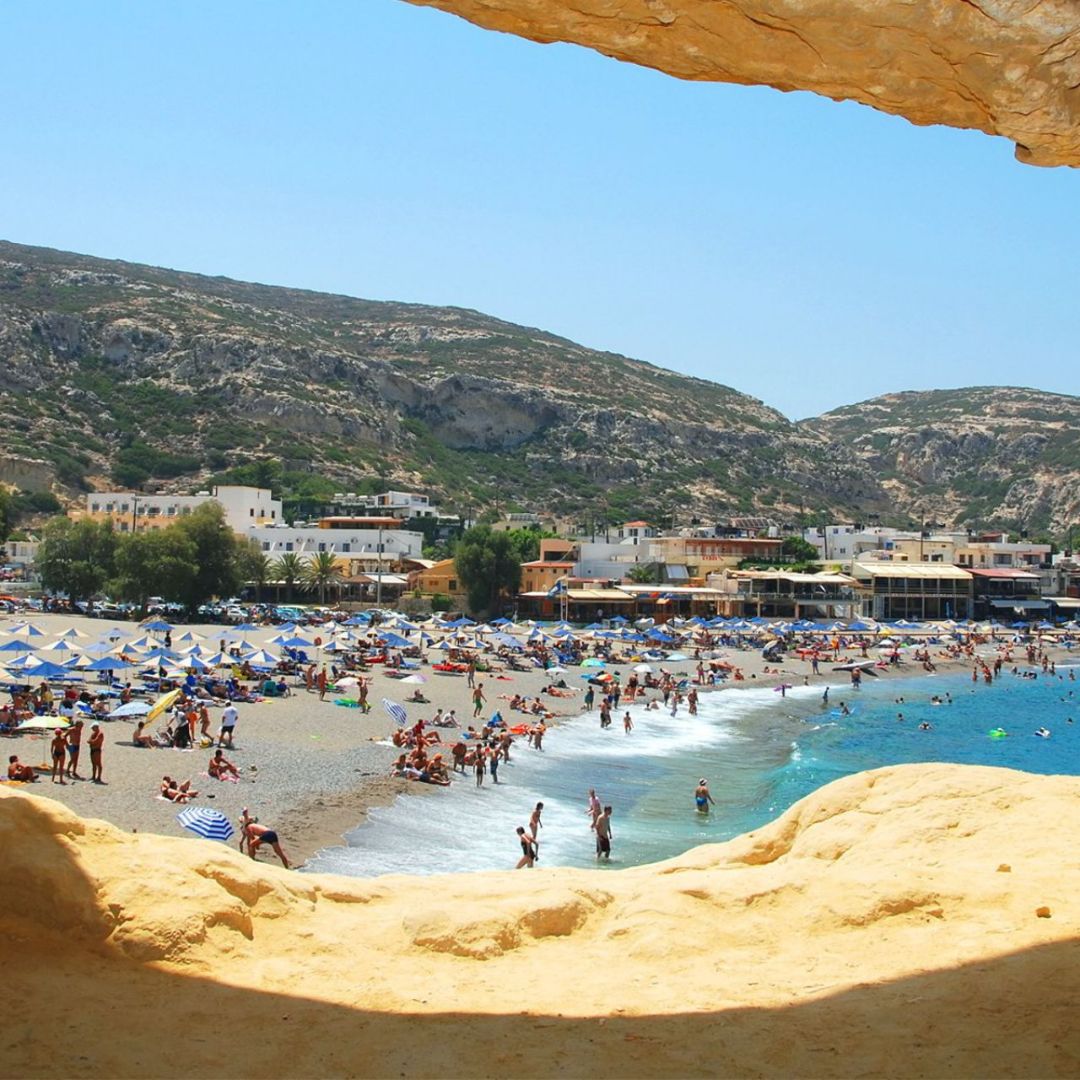
MATALA BEACH

A safe natural harbour on the Bay of Messara, blessed with a gently sweeping sand and pebble beach, the place in legend where Zeus swam ashore in the guise of a bull with Europa on his back. Many people make this village their base for Cretan holidays, as it is so central on the south coast, and away from the over-development of the north coast. The beach is 250m long and 45m wide.

Matala has something for everyone. Although it has become a popular tourist destination it still retains the charm and character of the quiet fishing village it started as at the beginning of the 20th-century, and the laid-back lifestyle of the hippies of the 60’s and 70’s lives on. Half the beach is fringed by tamarisk trees, leading the eye on to impressive formations of sandstone rock cliffs with their famous caves sliding into the sea at an odd angle, creating one of the most unusual beachscapes on the island.

MATALA BEACH

A safe natural harbour on the Bay of Messara, blessed with a gently sweeping sand and pebble beach, the place in legend where Zeus swam ashore in the guise of a bull with Europa on his back. Many people make this village their base for Cretan holidays, as it is so central on the south coast, and away from the over-development of the north coast. The beach is 250m long and 45m wide.

Matala has something for everyone. Although it has become a popular tourist destination it still retains the charm and character of the quiet fishing village it started as at the beginning of the 20th-century, and the laid-back lifestyle of the hippies of the 60’s and 70’s lives on. Half the beach is fringed by tamarisk trees, leading the eye on to impressive formations of sandstone rock cliffs with their famous caves sliding into the sea at an odd angle, creating one of the most unusual beachscapes on the island.

KALAMAKI MATALA

Kalamaki is a small seaside village located 65km southwest of Heraklion, between Matala and Kokkinos Pirgos. The beach in front of the village is only a small part (2.5 km) of the long seafront of Messara Bay. The beach has blond sand and the seabed has a long smooth rock, quite slippery. Large waves that are usually caused by the northwest winds, combined with the rocky bottom, make it difficult to access the beach sometimes. In front of the village, the beach is well organized with umbrellas, sunbeds, taverns, rooms, lifeguard, playground, water sports, etc, but if you want to stay remote you could walk to the southeast, till Kommos beach, which is preferred by nudists.

KALAMAKI MATALA

Kalamaki is a small seaside village located 65km southwest of Heraklion, between Matala and Kokkinos Pirgos. The beach in front of the village is only a small part (2.5 km) of the long seafront of Messara Bay. The beach has blond sand and the seabed has a long smooth rock, quite slippery. Large waves that are usually caused by the northwest winds, combined with the rocky bottom, make it difficult to access the beach sometimes. In front of the village, the beach is well organized with umbrellas, sunbeds, taverns, rooms, lifeguard, playground, water sports, etc, but if you want to stay remote you could walk to the southeast, till Kommos beach, which is preferred by nudists

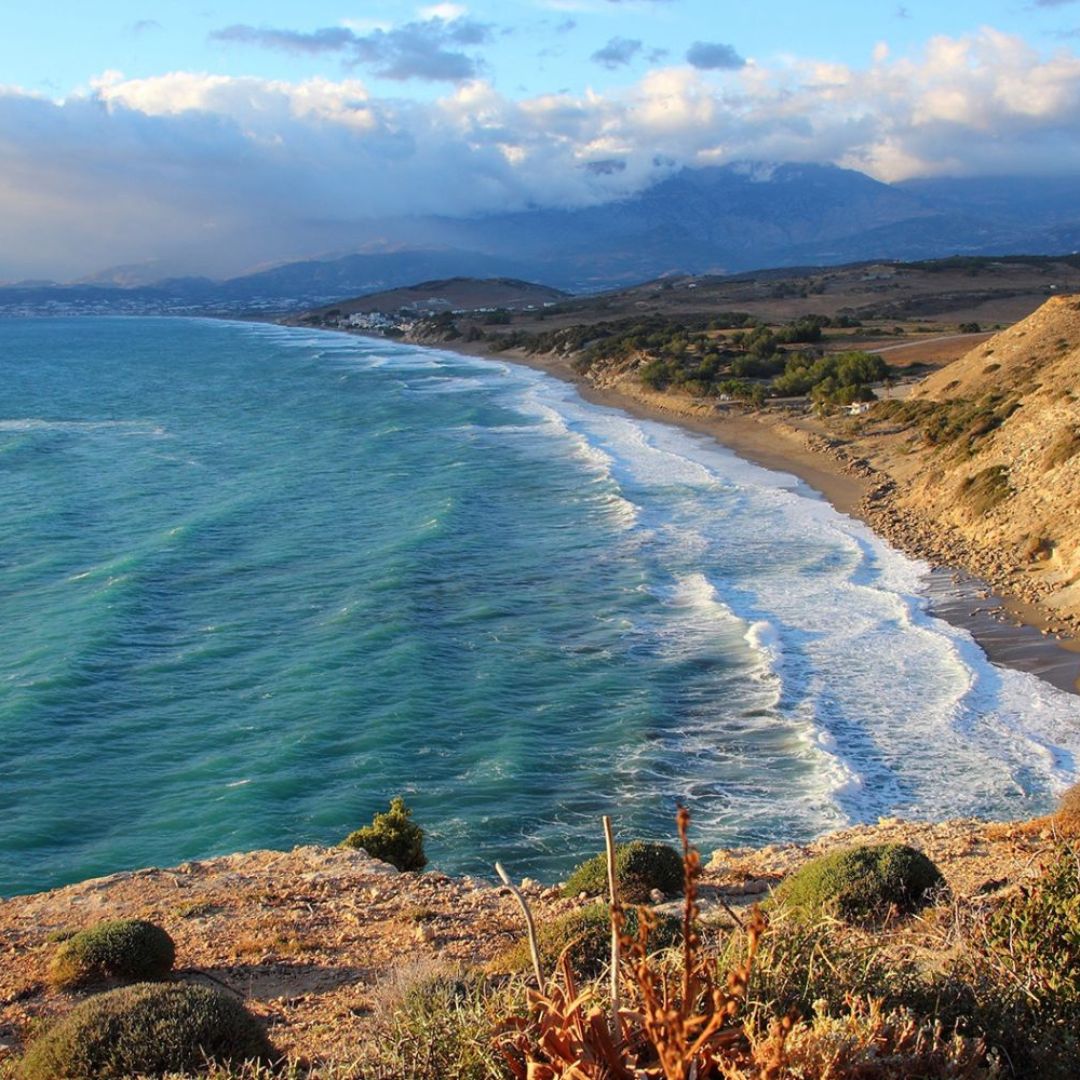
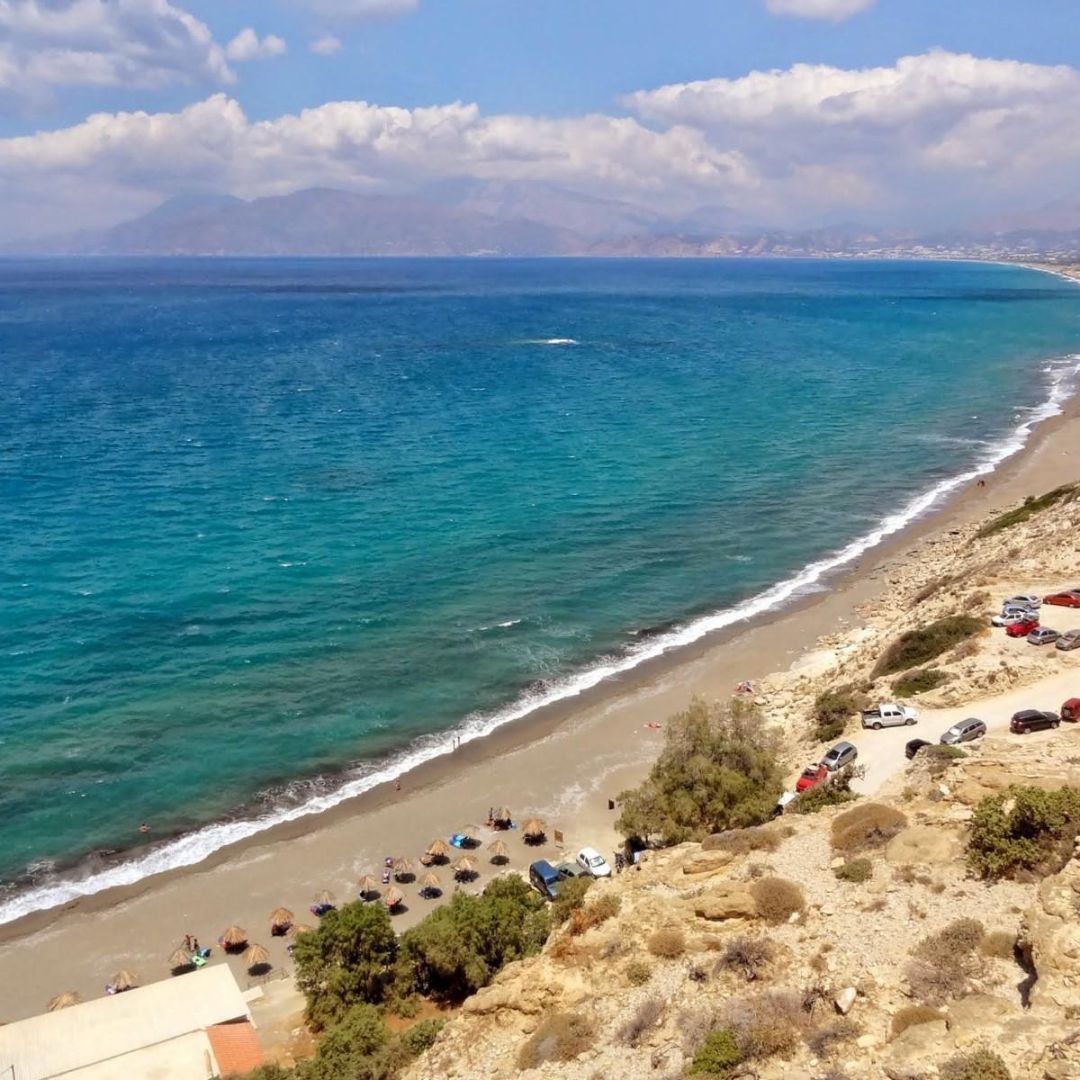
KOMMOS MATALA

Kommos (or Komos) is located 66km southwest of Heraklion, just 2km north of Matala and close the village Pitsidia. It is actually the southernmost and the most isolated part of the long beachfront of Messara Bay. Kommos was once the port of Phaestus; you can still see the ruins of the old port of Kommos on the beach. You can access Kommos by driving in the road heading to Matala.

The entire beachfront of Messara is exposed to westerly winds, which mostly blow in the area. Thus, caution is needed because the seabed in some places is rocky. The protected loggerhead sea turtles (Caretta caretta) lay their eggs in the sand of the beach, from May to September. There are only a few tamarisk trees around, not buildings, because Kommos is protected archaeological are and building is restricted.

KOMMOS MATALA

Kommos (or Komos) is located 66km southwest of Heraklion, just 2km north of Matala and close the village Pitsidia. It is actually the southernmost and the most isolated part of the long beachfront of Messara Bay. Kommos was once the port of Phaestus; you can still see the ruins of the old port of Kommos on the beach. You can access Kommos by driving in the road heading to Matala.

The entire beachfront of Messara is exposed to westerly winds, which mostly blow in the area. Thus, caution is needed because the seabed in some places is rocky. The protected loggerhead sea turtles (Caretta caretta) lay their eggs in the sand of the beach, from May to September. There are only a few tamarisk trees around, not buildings, because Kommos is protected archaeological are and building is restricted.

Our Lasithi, Our Paradise...